Giriş
Efes AntikAncient Tiyatrosu, antik dünyanın en büyük ve en görkemli açık hava tiyatrolarından biridir. Ege Denizi'nin kıyısında, tarihi ticaret yollarının kesiştiği İzmir'in Selçuk ilçesinde yer alan bu anıtsal yapı, Helenistik dönemden Roma İmparatorluğu'na uzanan iki bin yıllık zengin bir tarihe ev sahipliği yapmaktadır. 24.000 kişilik muazzam seyirci kapasitesiyle Efes Tiyatrosu, antik çağda yalnızca tiyatro oyunlarının sahnelendiği bir yer değil, aynı zamanda siyasi kongrelerin, gladyatör dövüşlerinin ve dini törenlerin düzenlendiği şehrin kalbi konumundaydı. Bugün UNESCO Dünya MirasıUNESCO World Heritage Listesi'nde yer alan bu anıt, heybetli duruşuyla geçmişin ihtişamını geleceğe taşımaktadır.
TarihHistoryHistoryçe ve ArkeolojiArchaeologyHistory & Archaeology
Tiyatronun inşası ilk olarak Helenistik dönemde, Büyük İskender'in generallerinden Lysimakhos tarafından M.Ö. 3. yüzyılda başlatılmıştır. Panayır Dağı'nın batı yamacına yaslanan bu ilk yapı, doğanın sunduğu eğimi akıllıca kullanarak sağlam bir zemin elde etmiştir. Roma İmparatorluğu döneminde, özellikle İmparator Claudius, Nero ve Trajan dönemlerinde yapılan genişletme çalışmalarıyla tiyatro, günümüzdeki anıtsal görünümünü kazanmıştır. M.S. 1. ve 2. yüzyıllarda sahne binasının (skene) üç katlı, heykellerle süslü görkemli cephesi tamamlanmıştır. ArkeolojiArchaeologyk kazılar, tiyatronun Hristiyanlığın yayılış döneminde de tarihi bir rol oynadığını göstermektedir; İncil'de adı geçen Aziz Pavlus'un Efeslilerle yaşadığı ünlü gümüşçüler ayaklanması bu tiyatroda gerçekleşmiştir.
MimariArchitecture Yapı ve AkustikAcousticsArchitecture & Acoustics
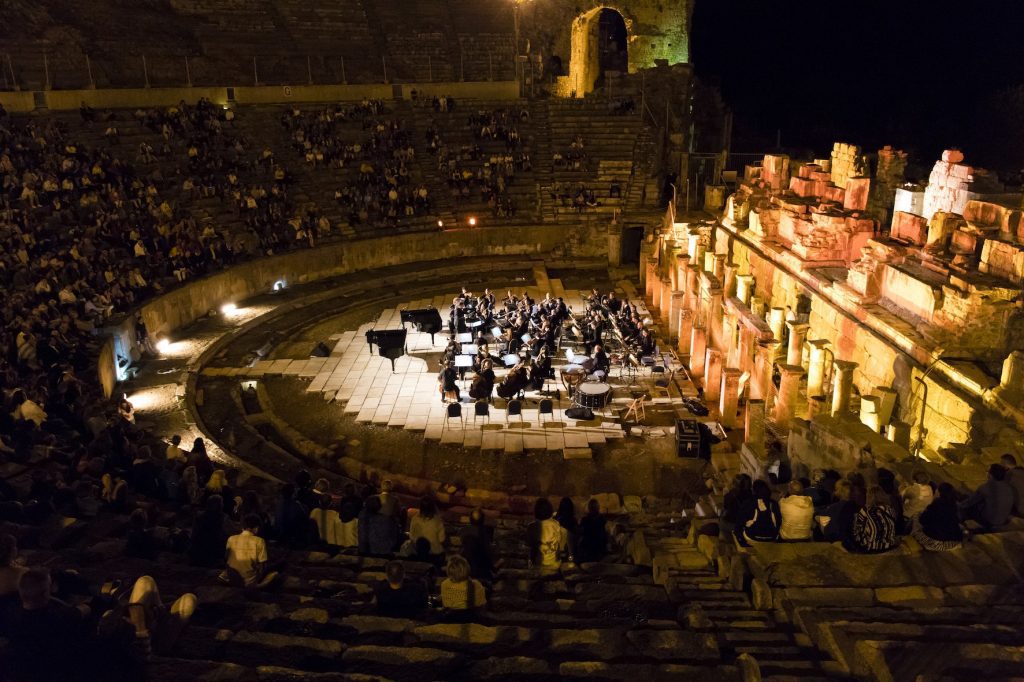
Efes AntikAncient Tiyatrosu üç ana bölümden oluşur: Cavea (seyirci oturma alanları), OrkestraOrchestra (yarım daire şeklindeki orta alan) ve Skene (sahne binası). Cavea bölümü, yatay geçitlerle (diazoma) üç ana bölüme ayrılmıştır ve dik açıyla yükselen 66 oturma sırasından oluşmaktadır. Bu tasarım, sahnedeki oyuncuların seslerinin en üst sıradaki seyircilere dahi net bir şekilde ulaşmasını sağlayan mükemmel bir akustik mühendislik örneğidir. Sahne binası, mermer kabartmalar, tiyatro maskeleri, sütunlar ve mitolojik tanrı heykelleriyle süslenmiş anıtsal bir cepheye sahipti. Sahne altındaki tüneller ve drenaj kanalları, antik mühendislerin drenaj ve lojistik konusundaki dehasını gözler önüne sermektedir.
Ancient Symphonia'daki RolüRole in Ancient Symphonia ve ÖnemiRole in Ancient Symphonia
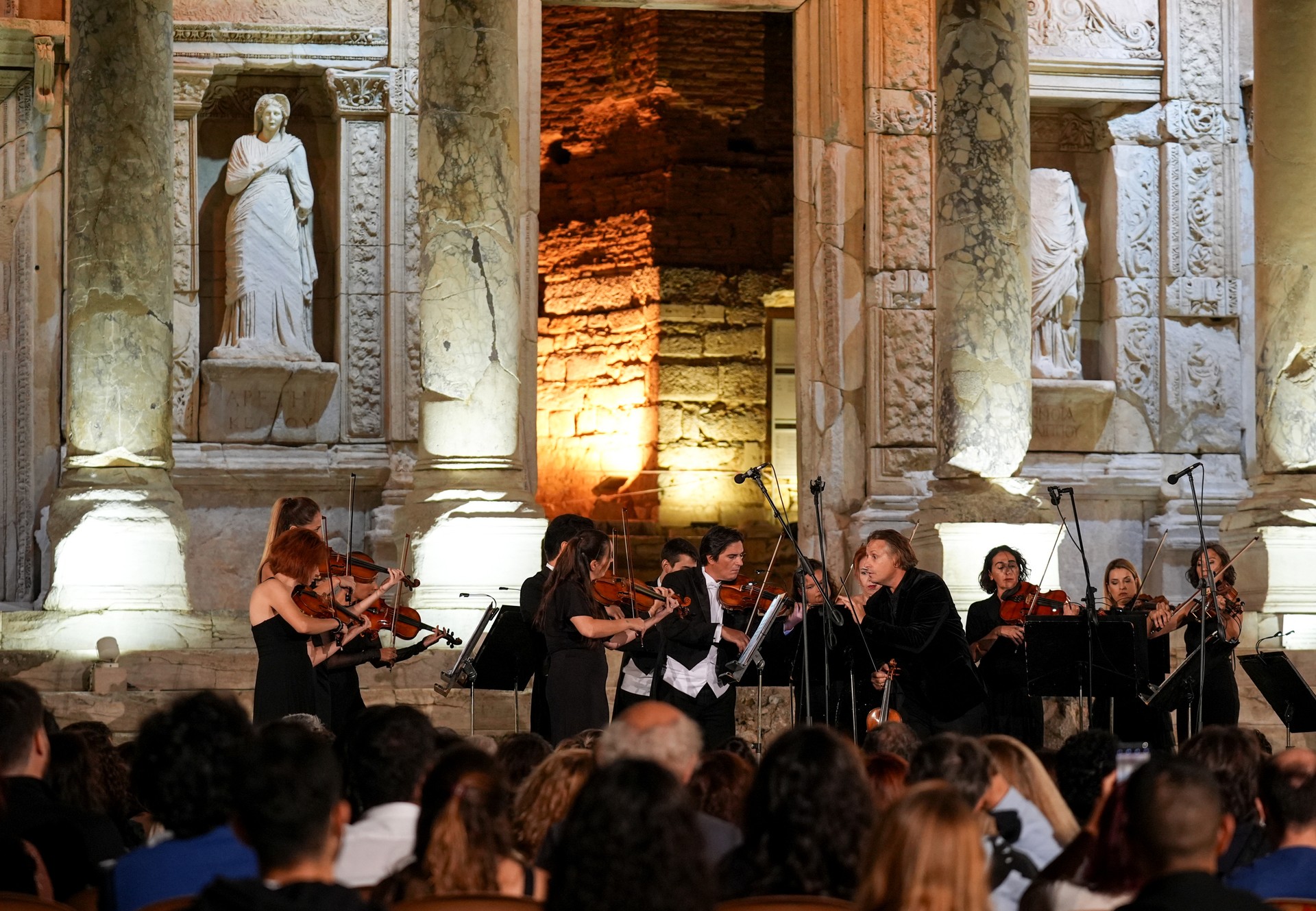
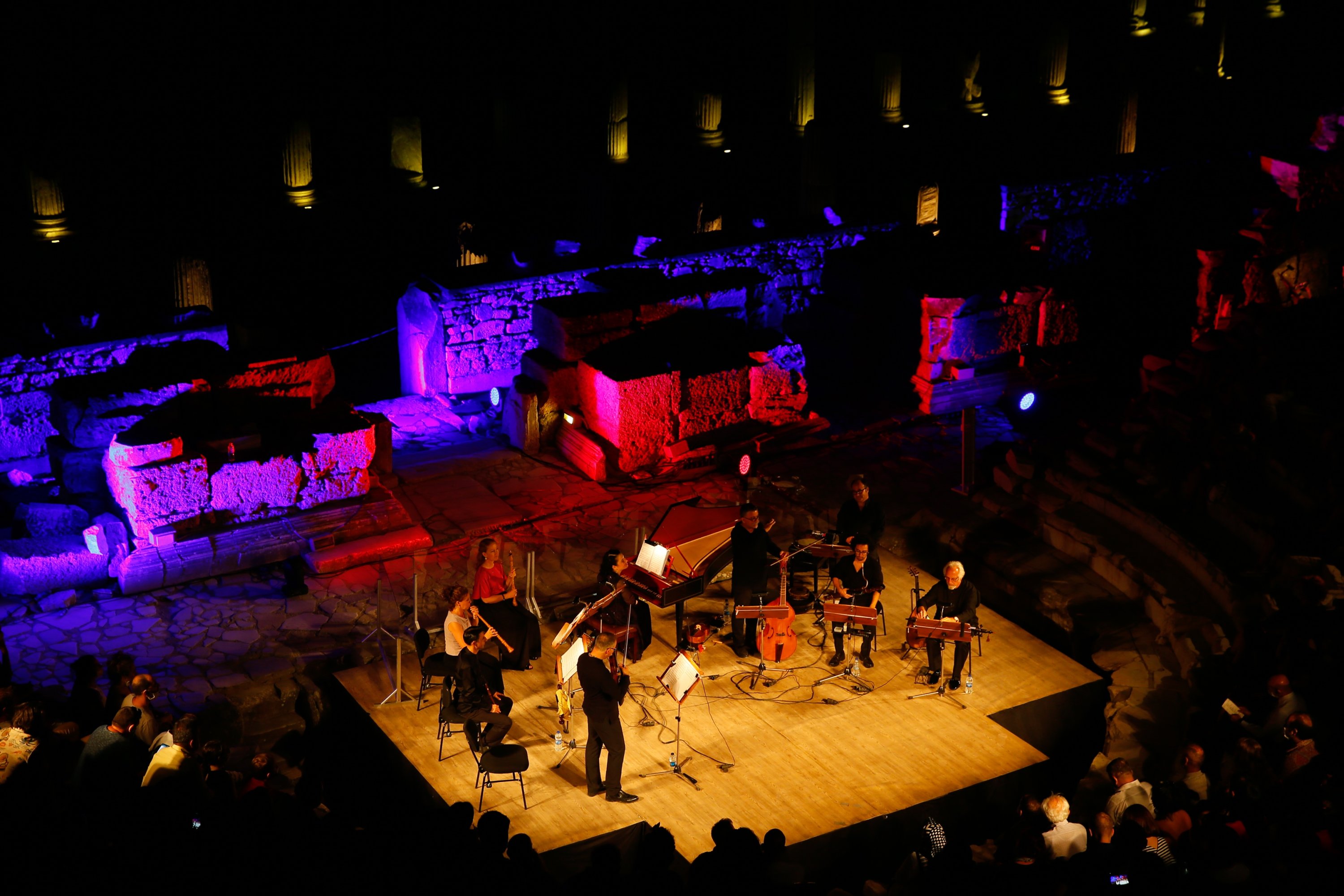
Efes AntikAncient Tiyatrosu, "Ancient Symphonia" projesinin açılış ve en prestijli durağıdır. 2000 yıllık mermer basamakların tarihi dokusu, Burak Yeter'in progresif elektronik düzenlemeleri ve senfoni orkestrasının büyüleyici tınıları ile birleşerek zamanı aşan bir atmosfer yaratmaktadır. Bu mekanda gerçekleştirilen performanslar, tarihin tozlu sayfalarını modern müziğin enerjisiyle aydınlatarak dinleyicilere sadece bir konser değil, antik çağın ruhunu yeniden hissettiren spiritüel bir müzik deneyimi sunmaktadır. Efes'in mükemmel akustiği, projenin sunduğu müzikal zenginliği en saf haliyle ortaya çıkarmaktadır.
Introduction
The Great Theatre of Ephesus is one of the largest and most spectacular open-air theatres of the ancient world. Located in the Selçuk district of Izmir, Turkey, near the historical crossroads of Aegean trade routes, this monumental structure boasts a history spanning over two millennia from the Hellenistic period to the Roman Empire. With a massive seating capacity of 24,000, Ephesus Theatre was not merely a venue for drama and performance, but the true civic heart of the city—hosting political assemblies, gladiator spectacles, and sacred ceremonies. Today, listed as a UNESCO World Heritage site, it stands as a testament to the grandeur of antiquity.
History & Archaeology
Construction of the theatre first began in the Hellenistic period under Lysimachos, one of Alexander the Great's generals, in the 3rd century BC. Set into the western slope of Mount Panayir, the architects cleverly utilized the natural hillside slope to support the stone seating. Under the Roman Empire, major expansions were carried out during the reigns of Emperors Claudius, Nero, and Trajan, bringing the theatre to its monumental scale. During the 1st and 2nd centuries AD, the stage building (skene) was embellished with a magnificent three-story facade adorned with statues and columns. Archaeological records show that the theatre played a pivotal role during the early Christian era; it was the site of the famous silversmiths' riot led by Demetrius against Saint Paul.
Architecture & Acoustics
The design of Ephesus Theatre comprises three distinct sections: the Cavea (auditorium), the Orchestra (semicircular performance area), and the Skene (stage building). The Cavea is divided horizontally by two walkways (diazomata) into three tiers, featuring 66 rows of stone seats rising at a steep angle. This calculation represents an acoustic masterpiece, enabling the actors' voices from the stage to reach the very top row with crystal-clear clarity. The monumental facade of the stage building was adorned with elaborate marble reliefs, theatrical masks, niches, and statues of mythological deities. Underground passageways and sophisticated drainage channels show the advanced civil engineering skills of the Roman period.
Role and Significance in Ancient Symphonia
Ephesus Ancient Theatre serves as the opening and most prestigious venue of the "Ancient Symphonia" project. The ancient marble steps, weathered by two millennia of history, provide a stark and beautiful contrast to Burak Yeter's progressive electronic synthesizers and the lush strings of the symphony orchestra. Performances in this legendary space ignite the ancient stones with modern sonic energy, offering the audience a spiritual journey into the past. The pristine acoustic profile of Ephesus guarantees that the fusion of electronic and classical orchestrations is captured in its purest and most majestic form.
Mekan Galerisi Venue Gallery